
Carrying the Gospel
into a Community
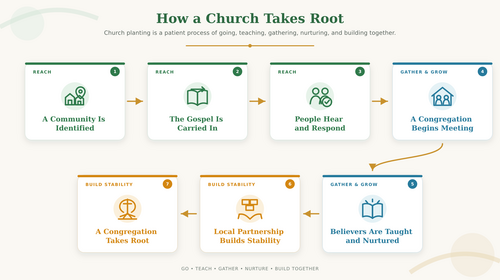
Church planting often begins when people in a community request teaching or when ministry leaders identify a village where there appears to be interest. Evangelists first explore the community, visit homes, and talk with residents. They may then return with other Christians for several days of public teaching and personal conversation.
This work has taken many forms over the years—from door-to-door evangelism and small home Bible studies to outdoor Gospel campaigns. The purpose is the same: to give people an opportunity to hear about Jesus, study Scripture, and ask questions.
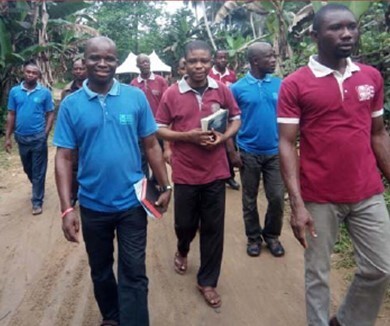
Evangelists set out to carry the Gospel into surrounding communities.

A minister welcomes a new brother in Christ immediately following his baptism.
People Hear and Respond
Gospel campaigns may draw a crowd, but the beginning of a church is personal. Evangelists answer questions, study Scripture with individuals and families, and continue visiting those who want to learn more.
When people choose to follow Christ and are baptized, they become the first members of a new congregation. What begins with a few believers can grow into a community that worships, learns, and serves together.
A Congregation Begins
with What Is Available
New believers do not wait for a building before they begin worshiping together. A congregation may first gather in a home, rented room, schoolroom, shed, or another borrowed space.
During this early stage, evangelists, Christian educators, and other experienced believers return to preach, teach, and encourage the group. This continued presence helps the congregation develop while support is sought for a local preacher and a more permanent place to meet.
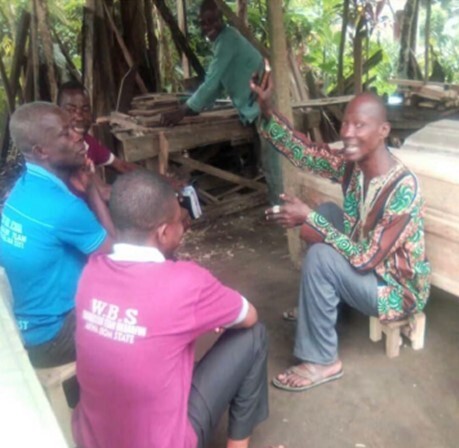
A Bible study gathers in a carpenter’s shed.
Teaching a New Congregation to Grow
Planting does not end when people are baptized or begin meeting together. New believers need continued instruction in Scripture, encouragement in their faith, and opportunities to learn how to serve one another as a church.
This teaching includes both adults and children. By returning to young congregations, evangelists and Christian educators help each church develop a strong biblical foundation for its worship, fellowship, and future.
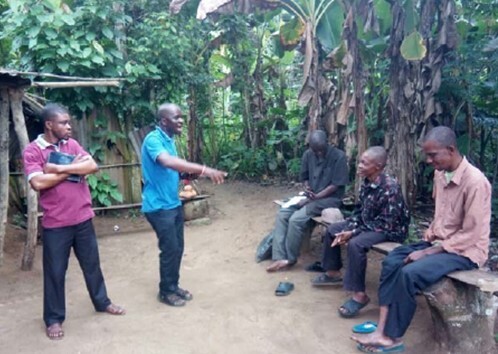
Teaching New Believers
An Evangelist Teaching at Ata Essien Obio Akpa Village.
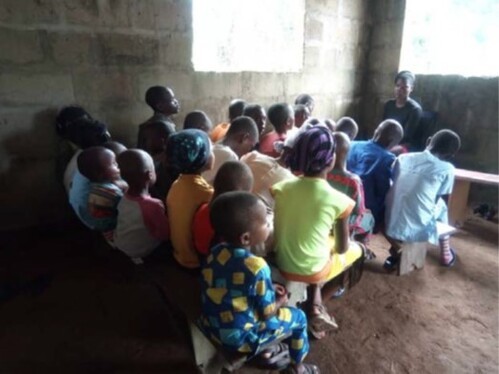
Teaching the Next Generation
Children participate in a Bible class at a newly planted congregation.
A Worship Hall Is Built Together
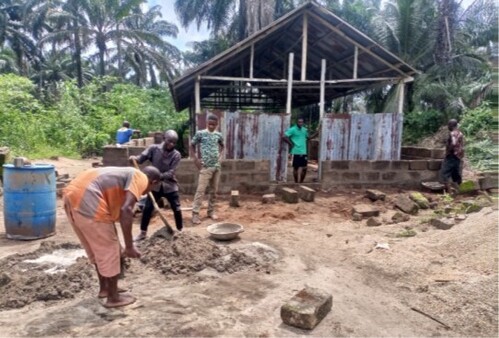
A worship hall takes shape at Ikot Ibekwe.
Once a congregation has begun and land becomes available, construction typically proceeds in stages. Local believers contribute as they are able—collecting road sand for block molding and providing labor, funds, or materials. Ministry partners may help purchase the land and provide cement, roofing, and other supplies.
As resources allow, blocks are molded and the walls begin to rise. Dr. Moses reports that completing a simple worship hall may take two to four years.
The building is not the church, but a dependable place to gather can give a young congregation greater stability and build confidence in its future.
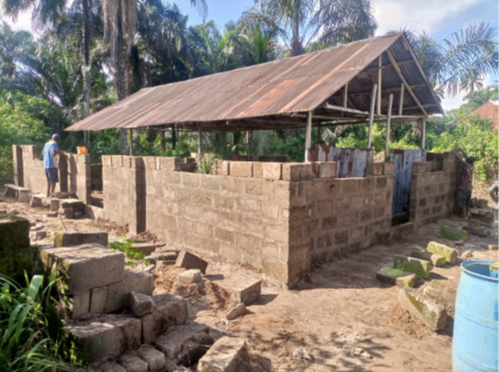
Construction at Ikot Ibekwe proceeds in stages.
A Congregation Takes Root
When believers continue gathering, learning, serving, and contributing to their shared work, a newly planted congregation begins to establish itself within the community.
A completed worship hall gives the church a dependable home for worship, Bible teaching, children’s classes, fellowship, and outreach. What began with an initial visit and a small group of believers becomes a visible, continuing Christian presence in the village.
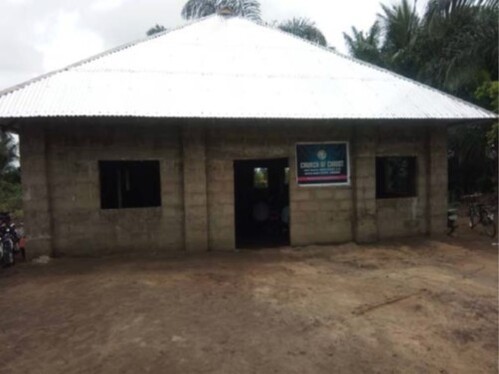
A Place to Gather
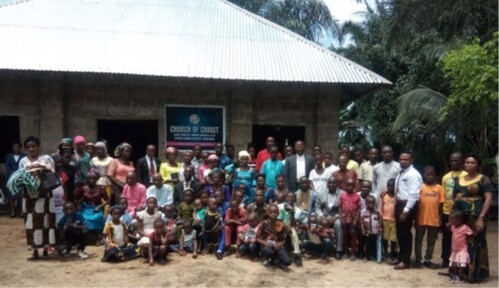
The completed worship hall at Ikot Osute gives the congregation a permanent place to meet.
A Church in the Community
The congregation at Ikot Osute gathers for worship.